
480°C


Product families
Choose by temperature
Industries we supply


Felt Rollers · Kevlar
Rated to 480°C
Reference price: US$102–122 per m², EXW
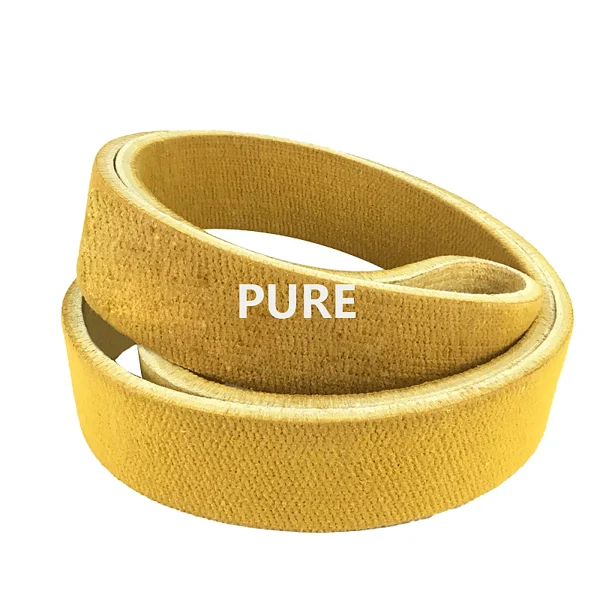
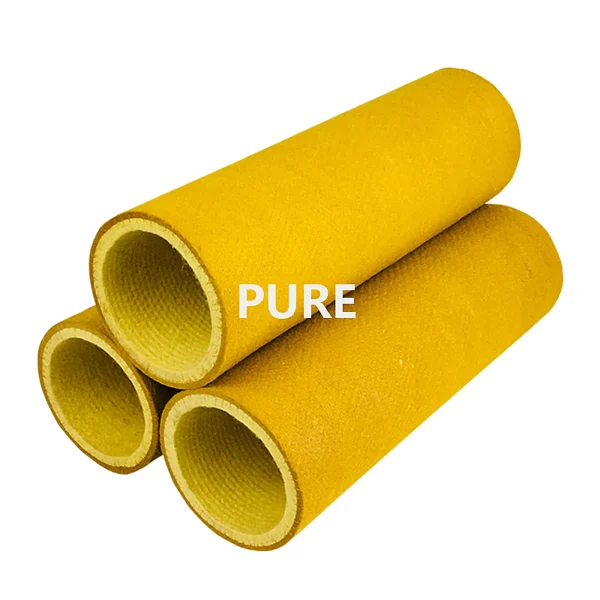
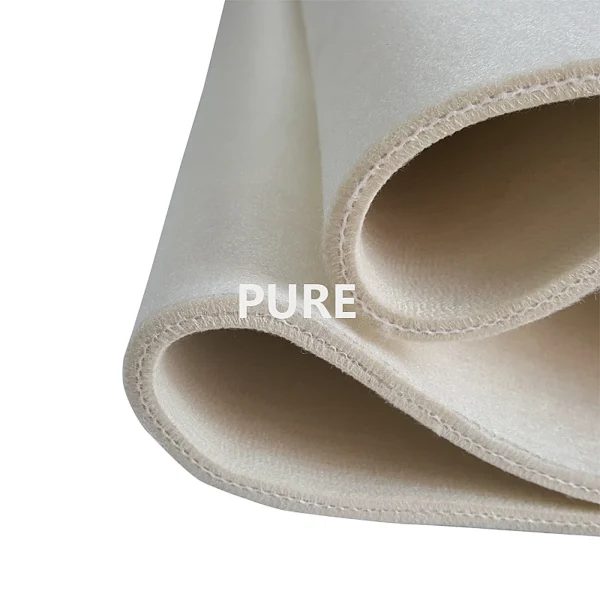
A seamless 100% Kevlar felt roller sleeve for the run-out table after the hot saw.
Runs at 480°C, with peaks to 500°C. Made to your roller size.
Kevlar felt roller
Most hot rollers on an extrusion line need Kevlar.
This sleeve is needle punched from 100% Kevlar para-aramid into one seamless tube.
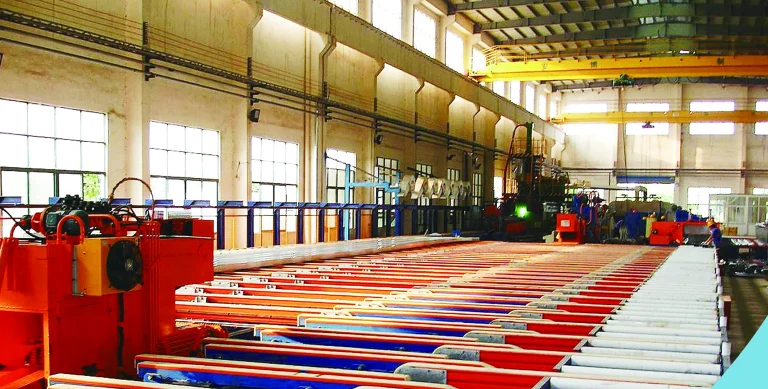
It covers the run-out table after the hot saw, where the profile is still hot.
480°C
Continuous working temperature
500°C
Maximum temperature
50–80
Sleeves on a typical line
18–350mm
Inner diameter
Specifications
Every sleeve is made to your roller.
Tell us the inner diameter, length and hardness grade.
| Model number | Roller-K |
|---|---|
| Type | Felt roller sleeve |
| Material | 100% Kevlar (para-aramid) |
| Colour | Yellow / green |
| Temperature | 480°C continuous, 500°C max |
| Density | 400 g/m²·mm |
| Thickness | 8–12mm |
| Inner diameter | 18–350mm |
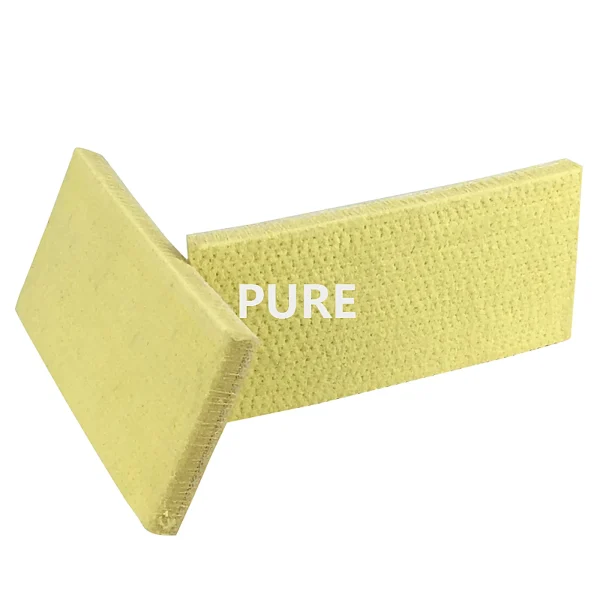
| Hardness grade | R0 (no resin), R1 (soft), R2 (semi-rigid), R3 (rigid) |
| Position on line | Run-out table after the hot saw, hot zone (about 50–80 pieces per line) |
| Technique | Needle punched |
| Size | Made to order |
| Packing | Shrink film and carton |
| Brand | PD |
| Origin | Guangdong, China |
Why Kevlar
01
Kevlar runs at 480°C and takes peaks to 500°C, which covers the run-out table after the saw.
02
The sleeve is needled as one tube, so there is no joint and the thickness stays even all the way round.
03
Four resin grades, from soft R0 to rigid R3, match the sleeve to the load.

Application
Kevlar sleeves cover the run-out table after the hot saw.
A typical line takes 50 to 80 of them.
The first five positions straight after the saw run hotter. Use PBO sleeves there.
Our factory
01
We use 100% Kevlar para-aramid fibre.
Strength 3.6 GPa, modulus 131 GPa, elongation at break 2.8%.
That strength is what lets the felt carry hot profiles without stretching.


02
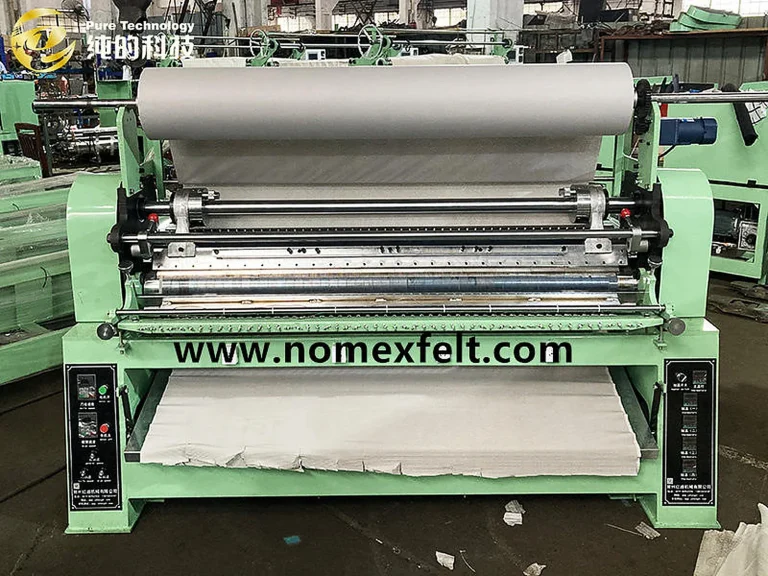
Carding opens the fibre and combs out impurities and short lint.
We control temperature and humidity so the web stays even.
An even web is what keeps the finished felt the same thickness from edge to edge.
03
The web is cross-laid in layers to the weight you need.
Needle punching then locks the fibre onto the base cloth.
The barbed needles pull fibre through the layers, so the felt holds together without glue.


04
Resin grades run from R0 (no resin) to R3 (rigid).
Resin adds wear resistance and stops aluminium swarf sticking to the felt.
Tell us how abrasive the position is and we will suggest the grade.
05
Each sleeve is cut to your roller length.
Ends come out clean, with no loose fibre.
Send the roller length and we cut to it. There is no standard size.


06
Every finished piece passes through a metal detector.
No broken needle leaves the factory inside the felt.
A broken needle tip left in the felt would mark your rollers or your product.
Quality
We work to an ISO 9001 quality system.
QC staff check the raw fibre and every production step.
Certificates are on file and we can send copies with your quote.
If you need a test report with an order, ask for it before production starts.


Packing
Sleeves are wrapped in clear film to keep them dry.
They then go into cartons for shipping.
Tell us if your forwarder needs different packing and we will pack to that.
Support
01
Send a drawing or the size of your old part. We make the new one to match.
02
Not sure which felt goes where? We match PBO, Kevlar, Nomex or polyester to each position on your line.
03
We also supply extrusion presses, ageing furnaces, dies and handling systems.
FAQ
The roller diameter, the sleeve length and the hardness grade.
A photo of the run-out table helps. Add your delivery address for shipping.
480°C is the temperature the sleeve can run at all day.
500°C is the short peak it can take.
R0 has no resin and is the softest. R3 is rigid.
Tell us the position and the profile type, and we suggest a grade.
No. It usually means the roller is not turning and the sleeve is rubbing.
Check that the roller spins freely.
We send a quote and an invoice. Production starts when payment arrives.
The balance is paid before shipment.
T/T, PayPal, Western Union and L/C.
Ask us if you need another method.
PD FELT · Foshan, China
Tell us the machine, the position on the line and the temperature. We make the felt to your drawing.
Size, working temperature and machine model help us quote faster.


