
480°C


Product families
Choose by temperature
Industries we supply


Endless Felt Belts · Kevlar
Rated to 480°C
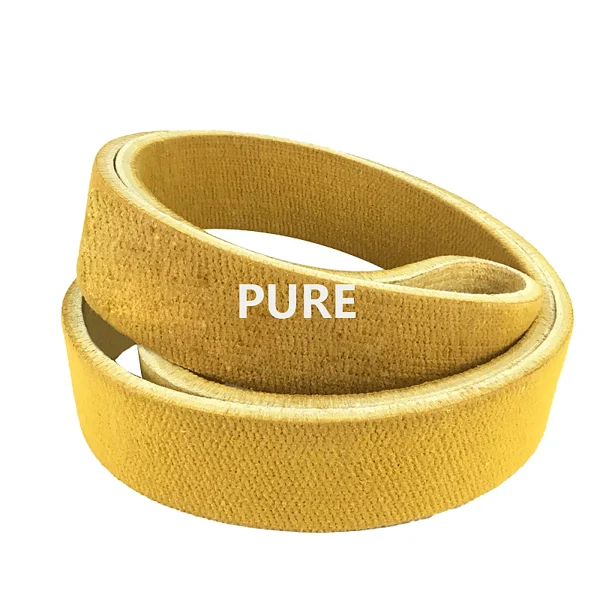
A seamless 100% Kevlar felt belt for the hot end of aluminium extrusion lines.
Rated to 480°C, with a maximum of 500°C. Made to your width and length.
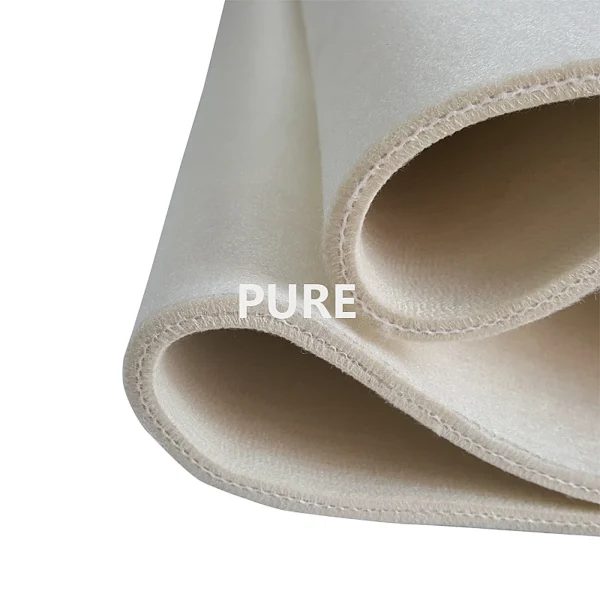
Kevlar conveyor belt
Hot aluminium profiles need a belt that takes the heat and leaves no mark.
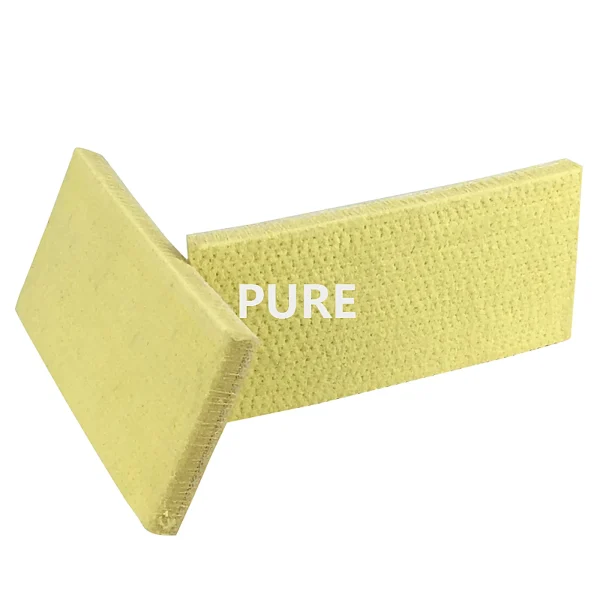
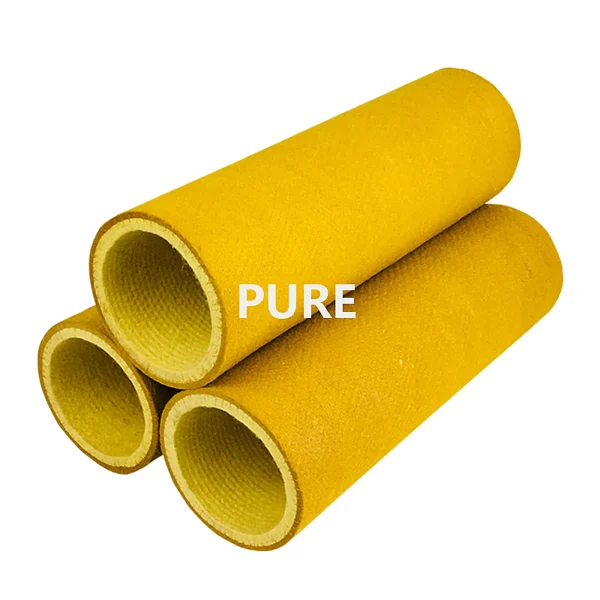
This endless belt is needle punched from 100% Kevlar fibre on a strong base cloth.
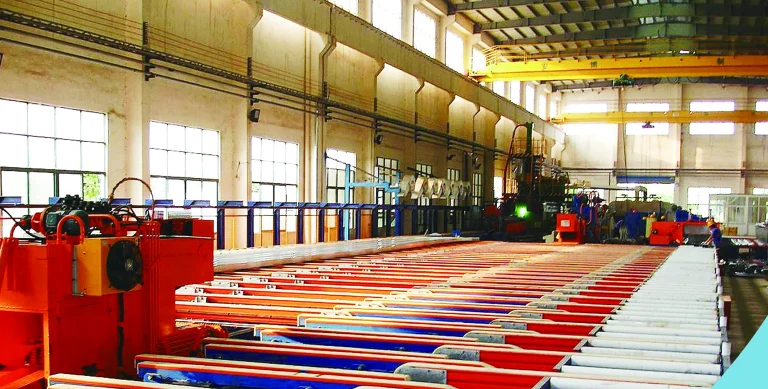
It runs on the first two levels of the cooling bed, where the profile is still hot.
480°C
Working temperature, max 500°C
480
Density, g/m²·mm
8–12mm
Felt thickness
40m
Longest belt, from 1.7m
Specifications
Every belt is made to order.
Send your width, length and thickness, and we quote from there.
| Model number | Belt-K |
|---|---|
| Type | Endless conveyor belt |
| Material | 100% Kevlar (para-aramid). Green version: 80% Kevlar + 20% carbon |
| Colour | Yellow / green |
| Temperature | 480°C, max 500°C |
| Density | 480 g/m²·mm |
| Thickness | 8–12mm |
| Width | 60–100mm, up to 1600mm |
| Length | 1.7–40m |
| Position on line | Cooling bed level 1 (lift-over) and level 2, presses under 2000T |
| Technique | Needle punched |
| Size | Made to order |
| Packing | Shrink film and carton |
| Brand | PD |
| Origin | Guangdong, China |

Tell us the position on your line
Send the roller size, working width and temperature at that station. We confirm the belt weight, thickness and price.
Why Kevlar
01
The belt is made endless, so there is no seam to open up. Thickness stays even all the way round, and there is no joint to leave a mark on the profile as it passes. A seam is where a belt usually fails first, so leaving it out is what makes the belt last on a hot line.
02
The surface is smooth and clean. It will not mark profiles going on to electrophoretic coating or polishing. Kevlar felt does not shed the way a coarse fabric does, so the surface stays free of loose fibre that would show up after anodising.
03
Kevlar works at 480°C and takes peaks up to 500°C, so it goes closest to the press. Optional resin treatment adds wear resistance where the belt runs against guides or hard edges. It also keeps its strength as it heats, instead of softening and stretching out of shape.

Application
Kevlar belts sit on cooling bed level 1, the lift-over, and on level 2.
They suit extrusion presses under 2000T.
One level usually takes 16 to 26 belts. The count depends on your press and floor space.
Hotter spots, like the press exit, need PBO felt.
Our factory
01
We start with 100% Kevlar para-aramid fibre.
Strength 3.6 GPa, modulus 131 GPa, elongation at break 2.8%.
That strength is what lets the belt carry hot profiles without stretching.


02
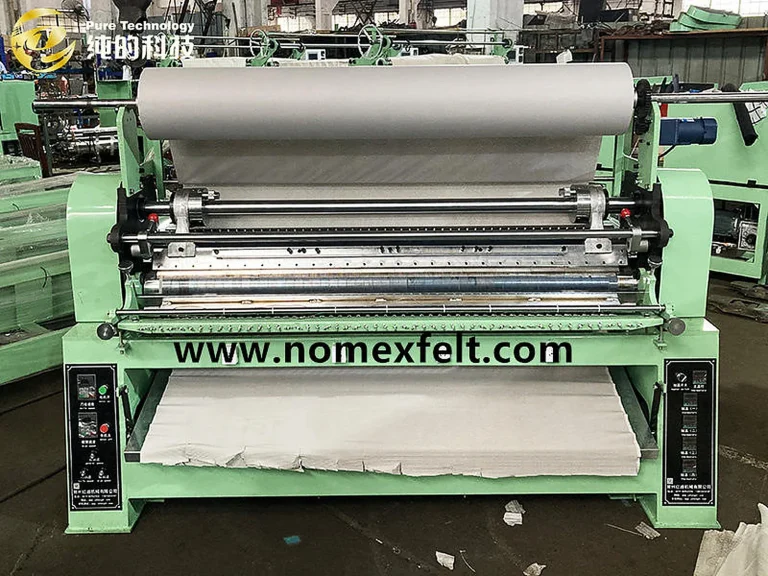
Carding opens the fibre and combs out impurities and short lint.
We control temperature and humidity so the web stays even.
An even web is what keeps the finished felt the same thickness from edge to edge.
03
The web is cross-laid in layers to the width and weight you need.
Needle punching then locks the fibre onto the base cloth.
The barbed needles pull fibre through the layers, so the belt holds together without glue.


04
Full or semi resin treatment is available.
It adds wear resistance and stops aluminium swarf sticking to the felt.
Tell us how abrasive the position is and we will suggest full, semi or none.
05
Each belt is cut to your size on a rotary cutter.
Edges come out clean, with no loose fibre.
We cut after the felt is checked, so the edge you receive is the finished edge.


06
Every finished belt passes through a metal detector.
No broken needle leaves the factory inside the felt.
A broken needle tip left in the belt would mark your rollers or the profile.
Not sure whether you need Kevlar or PBO?
Send the temperature where the belt runs and we tell you which fibre pays off, with prices for both.
Quality
We work to an ISO 9001 quality system.
QC staff check the raw fibre and every production step.
Certificates are on file and we can send copies with your quote.
If you need a test report with an order, ask for it before production starts.


Packing
Each belt is wrapped in clear shrink film to keep it dry and compact.
Belts then go into cartons for shipping.
Tell us if your forwarder needs different packing and we will pack to that.
Support
01
Send a drawing or the size of your old belt. We make the new one to match, in any width and length your cooling bed needs. If you are not sure how to measure it, send a photo of the belt on the machine and we work the size out with you.
02
Not sure which felt goes where? We help you match Kevlar, PBO or Nomex to each cooling bed level. Tell us the metal temperature at each level and we put the right felt in the right place. It keeps the cost down: Kevlar only where the heat needs it, a cheaper felt further along.
03
We also supply extrusion presses, ageing furnaces, dies and handling systems. That means one supplier, one set of paperwork and one shipment for the whole order. If you are setting up a new line, we can quote the felt together with the equipment that runs on it.
FAQ
The belt width, length and thickness.
A machine model and photo help. Add your delivery address and postcode for shipping.
We send a quote and an invoice. Production starts when payment arrives.
The balance is paid before shipment.
T/T, PayPal, Western Union and L/C.
Ask us if you need another method.
Import duties and taxes depend on your local customs.
Kevlar comes from the USA. It works at 480°C, with a maximum of 500°C.
PBO comes from Japan. Standard PBO works at 600°C, and a premium grade reaches 650°C.
It is usually overloaded, or running off the track.
Keep the load within limits and both edges running straight.
PD FELT · Foshan, China
Tell us the machine, the position on the line and the temperature. We make the felt to your drawing.
Size, working temperature and machine model help us quote faster.


